
















Bridging the “missing middle”: moving Africa’s e-mobility to scale
For Africa, the nascent electric 2- and 3-wheeler sector holds significant business, social, and environmental potential. Transporters – movers of people and goods – are central to Africa’s transition to electric vehicles (EVs), which have the potential to enable millions to increase their incomes sustainably. Forecasts project that millions of EVs will be on the road by 2040, with Asian market entrants poised to accelerate growth.
Yet, with only tens of thousands of EVs on African roads today, the current reality is far from the projected potential. A critical roadblock to the African sector’s growth is the absence of investment. Despite the undeniable promise, later-stage investors have yet to deploy enough capital to make an impact. This “missing middle” makes it difficult for the sector to scale to reach its full potential.
This need was at the centre of a closed-door investor roundtable held in London on 16 October 2025, organised by Shell Foundation (SF) and moderated by Hystra, under the Chatham House Rule. SF brought together a dozen leading investors – spanning growth-stage, early-stage, debt, and concessional financiers – to discuss how to bridge the sector’s “missing middle” and identify the signals and milestones needed to attract later-stage investments.
The need to reset the EV sector
The investors shared a strong conviction for the sector’s potential to deliver both commercial and impact returns. Yet, they were equally aligned in the view that the industry requires a fundamental reset before it can attract later-stage capital. Investors remain cautious due to the limited pool of potential buyers for exit opportunities, which constrains overall growth. At the same time, existing operators are valued at levels that offer little assurance to growth-stage investors of achieving meaningful returns on their capital.
What would such a reset look like? First, redefining the sector’s business model towards specialisation and partnerships; and second, realigning the sector’s capital stacks. Investors are cautious about the sector’s prevailing vertically integrated model, where companies manage everything from designing bikes and assembling components to operating energy networks, distributing and even financing vehicles. Asian OEMs are expected to reshape the landscape, creating threats and opportunities for African firms.
While vertical integration helped launch the sector, it now constrains scale. Fragmentation and poor interoperability across batteries, charging solutions, and software create inefficiencies. This deters investors, who seek replicable, capital-efficient structures that focus on scalable comparative advantages.
These advantages could be realised through partnerships with energy companies and Asian entrants, whose specialisation model in their own domestic markets could offer Africa useful lessons. A shift toward specialisation and partnerships is needed, with OEMs, service providers, software firms, and financiers leaning into their respective strengths.
For the sector to become attractive to later-stage investors, the capital stack needs to be reset alongside the business model. Investors see a mismatch, with African EV companies mixing an asset-heavy infrastructure model with the valuation expectation of technology start-ups and consequently, as one attendee put it, “equity is used for everything”. Instead, to encourage later-stage investment, capital should be matched to specific needs to ensure long-term sustainability: venture and private equity for innovation, and infrastructure financing for asset-intensive expansion.
Concessional capital can play a role here. As with the vertical model, it has been useful to develop the nascent sector in Africa, but to encourage later-stage investment, subsidies should not be used to sustain unviable models. Instead, concessional capital could be deployed away from individual companies towards ecosystem- level interventions. Tools such as shared infrastructure, interoperability standards, and carbon credit mechanisms could help build long-term sustainability more attractive to later-stage investors.
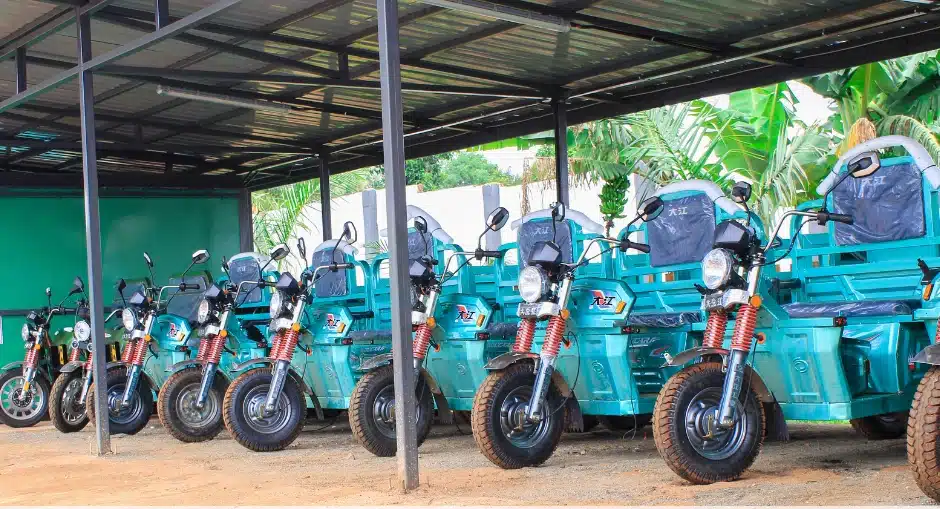
How can we elevate the African e-mobility market to the next level?
Looking ahead, Africa’s e-mobility sector requires collective leadership to reach maturity. Ecosystem-wide collaboration on policy, technology, and financing, as well as better coordination among potential investors, could accelerate the sector reset and thus increase its appeal to later-stage investors.
Actors such as SF can play a crucial role here, acting as catalysts for a cooperative and unified approach while providing the resources to develop solutions. Such an approach could extend to carbon finance, with collective initiatives – like advance market commitments – strengthening both sector revenue and long-term sustainability.
Initiatives like SF’s partnership with the UK Foreign, Commonwealth and Development Office (FCDO) on the Transforming Energy Access (TEA) programme provide a concrete example of how collaborative efforts can support the scale-up of clean energy solutions across Africa.
A cooperative approach is just a starting point, and many questions remain. The roundtable concluded with a recognition of the need for such collaboration among investors, governments and companies to enable the sector to scale. It established a set of strategic questions to guide a coordinated, collective approach: How can the sector drive interoperability and open standards for batteries, charging infrastructure and other key components to strengthen overall performance? How can procurement and supply chains be made more resilient? How can capital be aligned to ensure the right funding is directed to the right functions? And how can the sector stay ahead of technological changes – such as evolving battery life – while remaining competitive?
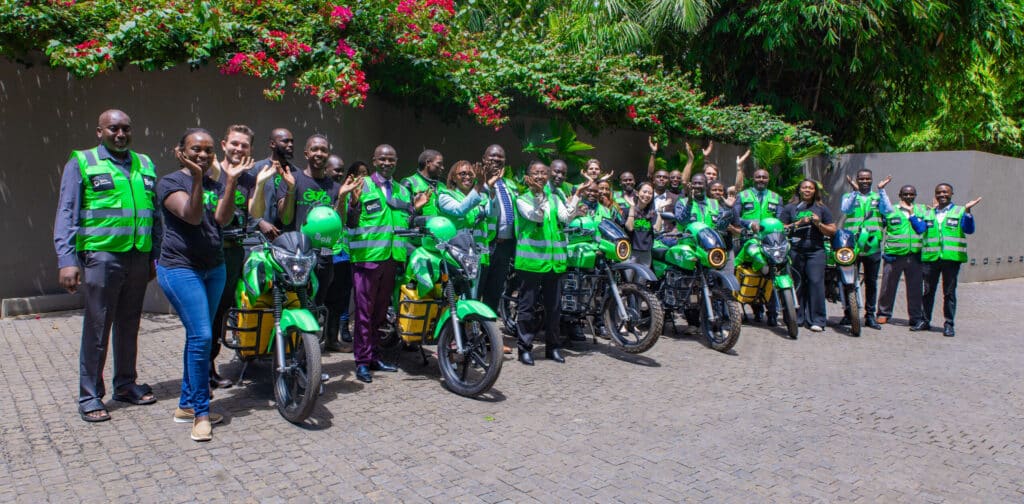
Looking ahead
Africa’s e-mobility market stands at a crossroads. New entrants from Asia will reshape the competitive landscape, bringing both risks and opportunities. Their experience offers valuable lessons in specialisation and economies of scale. Yet, Africa must craft its own model – one grounded in local customers’ needs and transport patterns, energy systems and financing realities.
Despite the existing barriers to later-stage investment, momentum is building. Several African companies are already experimenting with more open, interoperable approaches. Investors are keenly aware of the sector’s commercial potential and its substantial social and environmental benefits. Governments are beginning to discourage the duplication of infrastructure, indicating a potential shift towards coordinated, interoperable systems. When combined with the strategic priorities outlined previously, this provides a clearer and more actionable roadmap for both entrepreneurs and investors.
Significant challenges remain – from supply chains and battery performance to capital alignment and interoperable systems. With closer collaboration among companies, investors, and policymakers, Africa can build an e-mobility ecosystem that fulfils its potential, enabling transporters across the Continent to create truly sustainable livelihoods.