















500 Global and Shell Foundation Release Market Report on Scaling Sustainable Cooling and Clean Cooking in Emerging Markets


Singapore, 17 September 2026 — 500 Global, a global multi-stage venture capital firm, and Shell Foundation, an independent charity that empowers underserved customers to raise their incomes while lowering emissions, today released Scaling Sustainable Cooling and Clean Cooking. The report investigates which business model configurations can successfully scale sustainable cooling and commercial clean cooking technologies across Kenya, Nigeria, and India — three of the world’s most strategically important emerging markets for climate and development impact.
The report launches during the Global Cooling Pledge Assembly 2026 in Singapore, a major convening of governments, cities, and development partners accelerating implementation of the Global Cooling Pledge, which aims to cut sectoral cooling emissions by 68% by 2050.
Developed as part of their partnership around the Sustainable Innovation Program, supporting mission-driven founders as they scale ventures that deliver both market returns and measurable impact, the report was funded by Shell Foundation through the Transforming Energy Access (TEA) platform. TEA is funded by the UK government’s Foreign, Commonwealth & Development Office (FCDO) through its Global Research and Technology Development (GRTD) portfolio, and is part of the UK’s Ayrton Fund. With independent research conducted by Steward Requeen, it introduces a Supply-Side and Demand-Side (SS-DD) readiness framework that evaluates business model configurations across four dimensions: customer value, affordability, supplier economics, and the enabling conditions (infrastructure, financing, and market structure) each model requires to reach commercial scale.
Key findings include:
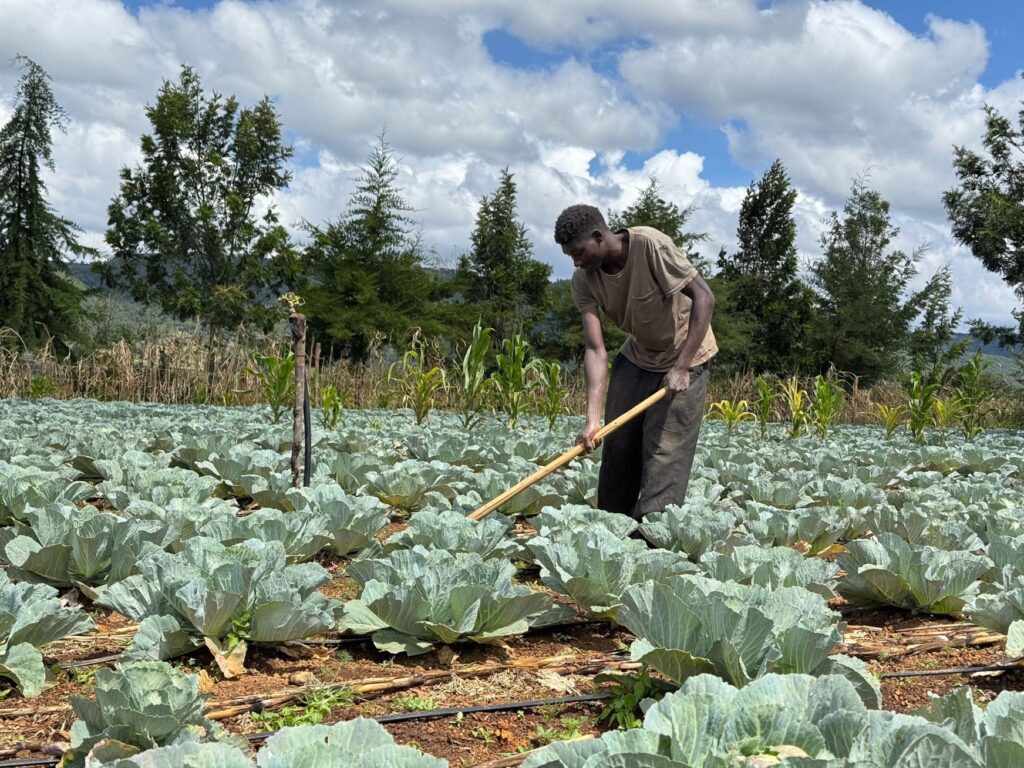
Cooling is a food systems and livelihoods imperative In Sub-Saharan Africa, where 30–50% of perishable produce is lost before it reaches consumers, scaling sustainable cooling iis a direct food system and income intervention. The highest-impact opportunity lies at the agricultural first mile: pre-cooling, milk chilling, packhouses, and shared cold storage, anchored by a cooperative, farmer producer organization, or off-taker that can aggregate dispersed demand.
- Nigeria’s highest-leverage opportunity lies in integrated cold-chain corridors combining aggregation, storage, refrigerated transport, and market linkage.
- Kenya’s strongest path is cooperative- and aggregator-led horticulture and dairy cooling.
- India presents the most mature opportunity for anchor-led first-mile cooling, supported by strong agricultural aggregation structures like those FarMart, a 500 Global portfolio company, has built connecting smallholders to commodity buyers.
Commercial cooking offers its own compelling near-term entry point. Financed solutions for fixed food businesses, street-food vendors, kiosks, cafés, and micro-restaurants, consistently show the strongest combination of customer value, supplier viability, and scalability.
- In Kenya, PAYGO-financed electric cooking is the most commercially attractive near-term path;
- In India, task-specific electric cooking offers the strongest foundation for scale;
- In Nigeria, recurring LPG supply models lead, with selective electric cooking viable where reliable power exists.
Scaling is driven by business model configuration, paired with technology. Models that solve a clear business problem for customers and fit existing value chains consistently outperform technology-led approaches. The most scalable configurations are those in which the customer or anchor captures enough value, demand is sufficiently concentrated to support high asset utilisation, and suppliers can recover costs without permanent subsidy support.
“This research is a direct expression of what our Sustainable Innovation Program is designed to do — create a platform for mission-driven founders to build ventures that deliver both market returns and lasting impact. By identifying the business model configurations that can scale cooling and cooking in Kenya, Nigeria, and India, it gives founders, funders, and policymakers a clearer picture of where that kind of impact is possible.”
At Shell Foundation, we’ve seen that the most scalable climate solutions are those that create clear economic value for low-income customers. When a market trader in Lagos has access to reliable, affordable cooling, she protects more of her produce, earns more, and does so with a fraction of the emissions of a diesel generator. This report gives funders and founders a framework for identifying where those outcomes can be made durable and scalable.
Latest news and updates

Shell Foundation welcomes Yamaha Motor to Africa Corporate Innovation Program to accelerate collaboration between Japanese corporates and African startups
09th September 2026