















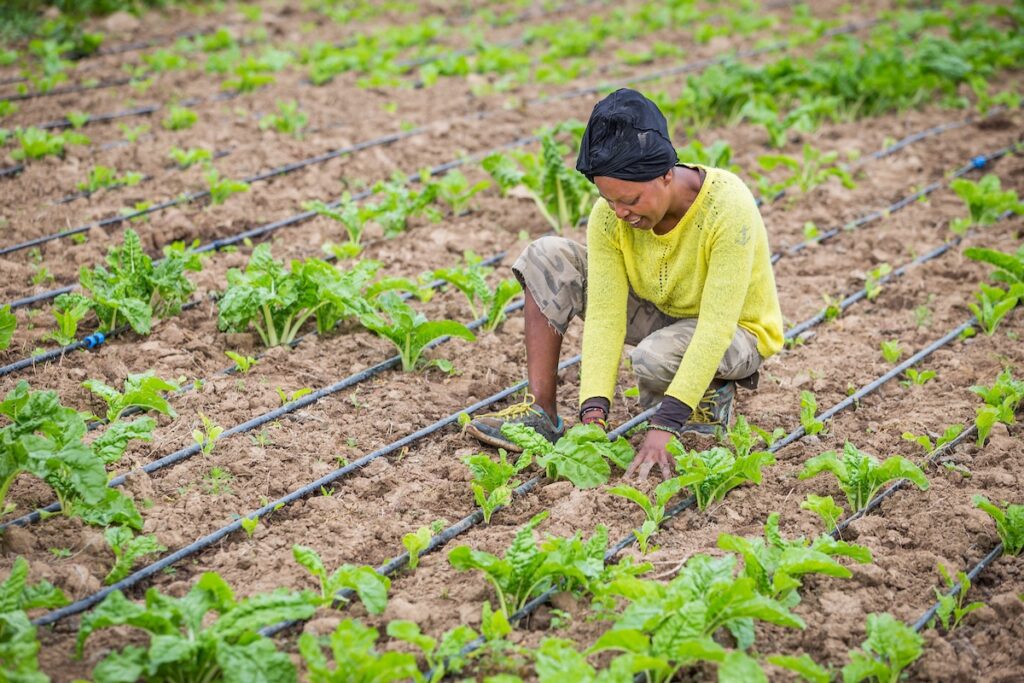
How solar irrigation is transforming the lives of smallholder farmers in Kenya – lessons and the road ahead
Agriculture is the engine of Kenya’s economy, accounting for 22% of GDP and employing more than 70% of the rural population. Yet, the majority of smallholder farmers rely exclusively on rain-fed agriculture and remain vulnerable to unpredictable rainfall and prolonged droughts, putting both their harvests and livelihoods at risk. Although irrigation could mitigate these risks, its potential remains largely untapped, with only 15% of it currently developed.
To break this cycle of climate vulnerability, the social enterprise SunCulture—supported by Shell Foundation and the UK Foreign, Commonwealth & Development Office (FCDO) under the Catalysing Agriculture by Scaling Energy Ecosystems (CASEE) programme—is deploying off-grid solar irrigation through an innovative “pay-as-you-go” (PAYGO) credit model. By embedding energy access directly into the irrigation system, SunCulture’s approach bridges water and power infrastructure gaps, making decentralised adoption feasible where grid power and diesel fuel remain unavailable or cost prohibitive. SunCulture reports having over 60,000 customers and more than 70% of the market share for solar irrigation solutions in sub-Saharan Africa.
To assess the impact of this intervention, Duke University conducted an evaluation, funded by Shell Foundation and the FCDO through CASEE, that compared Kenyan smallholder farmers who had adopted the SunCulture technology to a group who hadn’t, representing more than 750 households across six Kenyan counties, from 2023 to 2025. The results show how clean technology improves rural welfare and nutrition, while highlighting where more help is still needed.
From technology to resilience
Households with SunCulture products increased their irrigation usage from 72% to 95%, and the fraction of plots under irrigation doubled from 23% to about 50%. Beyond technology uptake, the study identified three significant “welfare wins”:
- Enhanced resilience: households using solar pumps scored significantly higher on IFAD’s Ability to Recover (ATR) index, showing their capacity to bounce back from environmental and economic shocks.
- The “Nutritional Dividend”: households increased their dietary diversity while reducing their total monthly expenditure, replacing purchased food with nutrient-rich crops that they produced themselves.
- Lower post-harvest loss: more predictable watering led to more predictable harvest timing and better crop conditions at harvest, reducing spoilage and handling waste.
- Fuel displacement and expansion: costly diesel pumps were largely replaced by solar technology and fuel expenditure dropped.
The learning curve: strategic specialisation
The Duke University team observed that adoption of solar irrigation triggers a strategic shift in farming practices. Rather than spreading risk across many crops, some farmers narrowed their focus to a smaller portfolio of higher-value irrigated crops, signalling a move toward deliberate specialisation.
While revenue expectations for the future increased, net income and productivity remained stable in the first year of adoption. This reflects an adjustment period, as farmers require multiple seasons to optimise use of the technology, refine crop selection, and align input and labour investments with new production strategies.
Navigating the transition: liquidity and gender dynamics
The report highlights key bottlenecks in technology adoption that should be addressed:
- Liquidity strain: treated households reported lower confidence in their ability to raise 10,000 Kenyan Shillings for emergencies. This highlights the liquidity strain caused by ongoing PAYGO repayments and suggests the need for more flexible credit lines.
- The access gap: current adopters have significantly higher baseline incomes than non-adopters. To reach the most vulnerable farmers, further efforts are needed to lower the entry bar.
- Gender dynamics:
- Households with higher female participation in agricultural work reported lower agricultural revenue expectations and less engagement in paid labor, as women’s time shifted toward household chores.
- Households with shared decision-making was linked to higher revenue expectations and stronger resilience, while male-only decisions led to greater specialisation and spending.
- External labour: the shift to solar pumping was associated with increased use of hired labour, showing that households are not only reallocating internal work but actively expanding production to manage larger harvests.
The path forward
The research highlights encouraging evidence that access to SunCulture’s solar-powered irrigation systems is associated with meaningful improvements in welfare, and capacity to adapt among smallholder farmers in Kenya, including higher dietary diversity, reduced post-harvest losses, and increased use of hired labour. The reduction in household spending and adaption of crop production reflect a transition period during which households are beginning to integrate new technology, and the need for longer-term evaluation to provide more insights on the full application of the SunCulture model.
Experiences like SunCulture’s show that inclusive, scalable solutions combined with innovative financing, service delivery, and policy can make a real difference.
Using carbon market revenues to reduce the upfront cost of pumps makes solar irrigation more accessible, while repayment structures aligned with agricultural cash flows can provide farmers with sufficient stability to repay loans without straining emergency funds. Paired with financial literacy, access to inputs such as improved seeds, and extension advice, this approach lays a strong foundation for long-term climate adaptation. National policy also needs to evolve. Strategies should move beyond large-scale public irrigation schemes and focus on creating an environment that empowers smallholders to invest in their own technologies.
Small-scale solar irrigation as a resilience-first investment can improve productivity and income with aligned policy, finance, and support.
Latest news and updates
From flame to plug: what India’s micro-food vendors tell us about the commercial future of clean cooking
New research shows how electric cooking is improving productivity, incomes, and working conditions for micro-food vendors across India.
18th March 2026
What gender-responsive financing can unlock for women entrepreneurs
A Gender Results-Based Financing pilot shows how targeted incentives can unlock income growth, resilience, and opportunity for women entrepreneurs.
08th March 2026