
















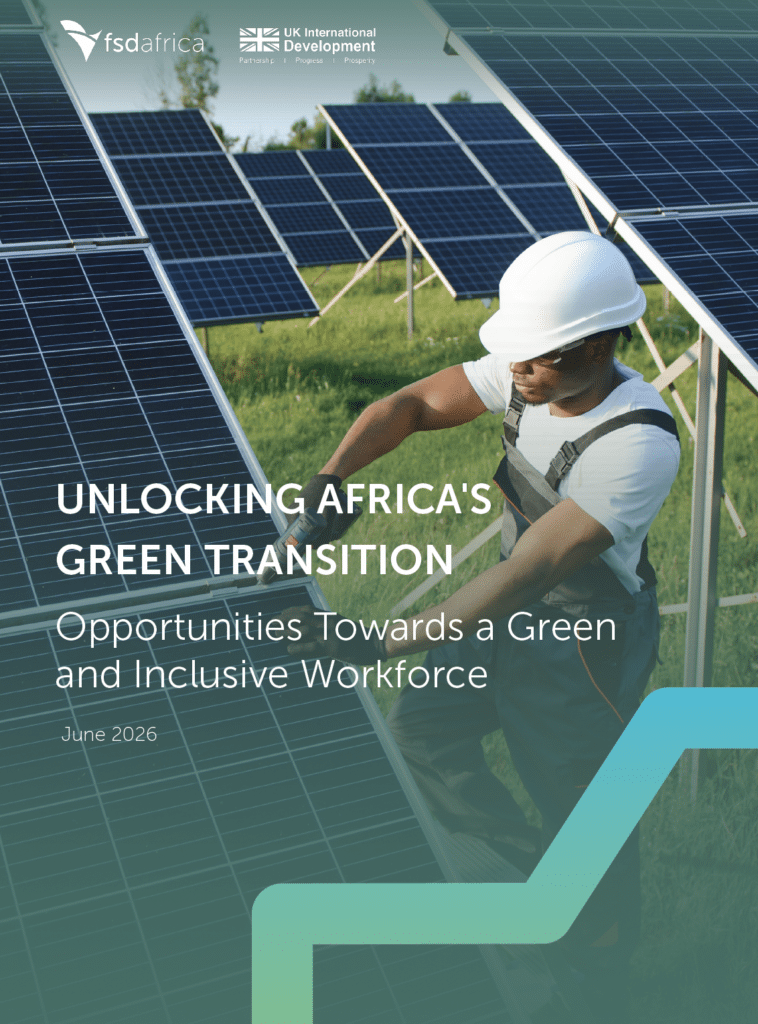
Africa’s Green Transition To Create Up to 84m Jobs by 2050 But It Risks Embedding Inequality Without Urgent Action, Says Report



But It Risks Embedding Inequality Without Urgent Action, Says Report
- Up to 7.9 million green jobs projected by 2030 (rising to 84 million by 2050)
- 86% of green jobs in 2030 are expected to be informal and excluded from formal labour protections
- Africa’s renewable energy workforce currently accounts for just 2% of the global total, despite the continent holding 60% of the world’s best solar resources
- Less than 1% of climate finance is directed toward skills development, creating a major bottleneck
- To help address key barriers, FSD Africa is launching the Green Jobs Innovation Hub, mobilising finance and partnerships to scale workforce solutions across the continent.
London / Nairobi, 16 June 2026 – Africa’s green transition could generate up to 84.5 million jobs by 2050 but without concerted policy action the benefits risk entrenching inequality rather than reducing it.
This is the key finding of a new report, Unlocking Africa’s Green Transition: Opportunities Towards a Green and Inclusive Workforce, launched by financial sector development agency FSD Africa in partnership with Shell Foundation, a philanthropic foundation working to raise incomes while lowering emissions, and Shortlist, a talent advisory firm working across Africa. Shell Foundation’s participation is funded by the UK Government via the Transforming Energy Access (TEA) platform.
A once-in-a-generation opportunity
The report shows that Africa’s green economy is already taking shape, with 3.8 to 7.9 million jobs projected by 2030, rising to between 65.9 and 84.5 million by 2050.
Unlike other regions, Africa’s transition will be driven not by large infrastructure projects, but by decentralised, service-led industries, including clean cooking, off-grid solar, waste recycling, and electric mobility.
These sectors are expected to create most jobs through installation, distribution, and last-mile services, providing critical entry points for youth, women, and low-income workers.
A critical workforce gap threatens progress
Despite the scale of the opportunity, the report highlights a major constraint: Africa lacks the workforce capacity needed to deliver the transition at scale.
- Africa’s renewable energy workforce accounts for just 2% of the global total, despite the continent holding 60% of the world’s best solar resources
- Only 6.5% of African youth have completed formal vocational training
- Less than 1% of climate finance is directed toward skills development, creating a major bottleneck
Without urgent investment in training and workforce systems, projects will stall, rely on imported expertise, and fail to deliver local economic benefits, warns the report.
Unlike other regions, the employment dividend of Africa’s green transition will be realised through service value chains, not construction sites, and we have to invest accordingly. Finance directed towards sectors such as clean cooking, distributed solar, waste recycling and e-mobility will generate substantially more employment than utility-scale infrastructure. But we also need the right policy frameworks to make that happen.
Most green jobs will be informal raising risks of inequality
The report also challenges assumptions about the nature of green employment:
- 86% of green jobs in 2030 are expected to be informal
- The fastest-growing sectors: clean cooking, waste recycling, and solar home systems — are those with the lowest barriers to entry but weakest job protections
- Women and young people are expected to benefit significantly from job creation but largely in informal, lower-value roles
Without targeted interventions, most workers will remain outside formal labour protections. Women in particular are concentrated in commission-based, lower-value roles without progression pathways or social protection.
Africa’s green transition represents one of the most significant economic opportunities of our generation. However this vision can only be realised if the green economy is designed to work for the lower-income and informal workers who power our society – and in particular for the women. The prize here is not ‘more green jobs’. The prize is future-proofed jobs anchored in sectors that will continue to grow as the world navigates compounding climate, energy and economic disruption.
Policy and financing decisions will determine the outcome
The report makes clear that the difference between high and low job scenarios is not inevitable, it is the result of policy choices.
If governments and investors act decisively, Africa could create nearly 8 million green jobs by 2030. Without action, the figure could be less than half that level and by 2050 the result would be 18.5m fewer jobs.
Key priorities include:
- Redirecting finance toward high-employment sectors such as clean cooking, distributed solar, waste and e-mobility
- Investing in green skills systems, including modular training and recognition of informal skills
- Embedding workforce and gender inclusion targets into climate finance
- Extending social protection to informal workers, including through mobile platforms
- Developing innovative financing mechanisms to unlock capital for skills development
The right human capital is an important input for successful climate-positive growth, so we have to be sure Africa’s workforce is ready for what’s needed. But high-quality jobs are also an exciting benefit of the green transformation. Now we have an even better idea where these millions of jobs and livelihood opportunities will come from and what we can do to make sure the market is ready.
No one size fits all
The report takes an in-depth look at three countries: Kenya, Nigeria and South Africa, concluding that there is no one green transition and a single continental strategy would fail. Key findings include:
- Nigeria’s projected 2030 green workforce is around 87% informal and driven by nano-enterprises
- South Africa’s is around 70% formal and shaped by regulated procurement frameworks
- Kenya’s occupies a distinctive middle ground anchored by mobile money infrastructure and devolved governance.
Overall, East and Southern Africa are projected to capture 58% of 2050 high-scenario green employment despite housing only 40% of Sub-Saharan Africa’s population, reflecting deeper enabling conditions already in place.
From research to action: launching the Green Jobs Innovation Hub
To help address these barriers, FSD Africa is launching the Green Jobs Innovation Hub, aimed at mobilising finance and partnerships to scale workforce solutions across the continent.
The initiative will focus on unlocking new financing models to ensure that workforce development keeps pace with investment in green infrastructure.
A call to governments, investors and industry
The report calls on stakeholders across the ecosystem to act urgently:
- Governments to integrate jobs and skills into climate and industrial strategies
- Development finance institutions to embed workforce investment in funding decisions
- Private sector actors to invest in training and improve job quality
- Training providers to modernise curricula for emerging green roles
Only a coordinated response, the report warns, will ensure the green transition delivers both climate outcomes and broad-based economic opportunity.
Latest news and updates
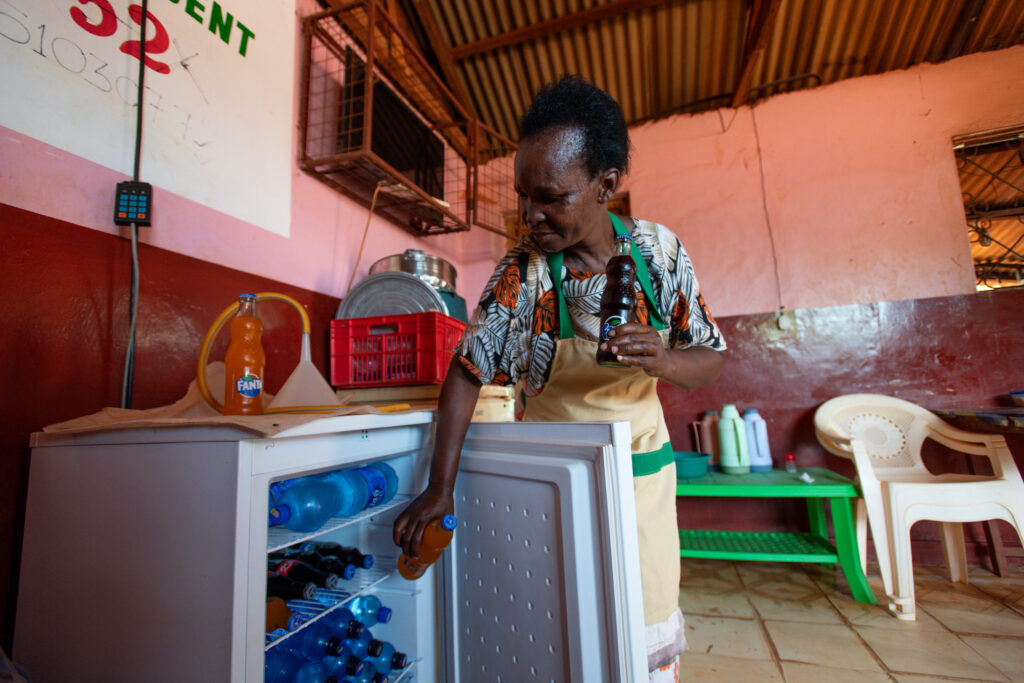
New research reveals the “cooling dividend” for workers and entrepreneurs facing extreme heat
23rd September 2026