














Shell Foundation expands partnership with the FCDO to co-fund and deliver the Transport Innovation Hub under the RIDE programme

Shell Foundation today announced an update on their partnership with the UK Foreign, Commonwealth & Development Office (FCDO) to co-fund and deliver the Transport Innovation Hub (TIH), a Pillar of the Research on Infrastructure in Developing Economies (RIDE) programme, with £1.7 million in funding from FCDO and £0.85 million from Shell Foundation.
RIDE is a global research and innovation programme designed to catalyse change in sustainable transport through science, partnerships and innovation. It is implemented by a consortium led by GIZ, in partnership with Shell Foundation (SF), the World Resources Institute (WRI) and the Transport Research Laboratory (TRL), with GIZ as the lead partner.
At the heart of RIDE, the Transport Innovation Hub provides a platform to test, refine and scale early-stage solutions addressing transport challenges in low- and middle-income countries, helping bridge the gap between research, policy and investment.
Shell Foundation’s co-funding and delivery of the Transport Innovation Hub builds on its long-standing collaboration with FCDO since 2011 to co-fund and deliver research and innovation programmes that accelerate access to clean energy and support inclusive economic growth. Through this collaboration, Shell Foundation will lead efforts to translate evidence into practical applications and scale innovations that can improve transport systems, mobilise investment and deliver more inclusive, low-carbon growth.
RIDE represents an important step forward in how we connect research, innovation and investment to address some of the most pressing transport challenges facing low- and middle-income countries. We greatly value our continued partnership with the FCDO, which reflects our commitment to supporting solutions that can be tested, refined and scaled to deliver impact at pace.
RIDE aims to generate policy-relevant evidence, strengthen transport systems and mobilise private finance for sustainable infrastructure, with a strong focus on inclusion, resilience and climate outcomes.
By working with governments, research institutions, development partners and investors, the programme seeks to ensure that transport investments are informed by robust evidence and deliver long-term economic and social benefits.
Accelerating EV Supply for Africa’s Mobility Transition
Across Africa, millions of transporters depend on two- and three-wheelers as productive assets that generate income for themselves and their families. Yet one of the biggest barriers to widespread EV adoption remains access to affordable, durable and commercially viable electric vehicles supported by reliable service and distribution networks.
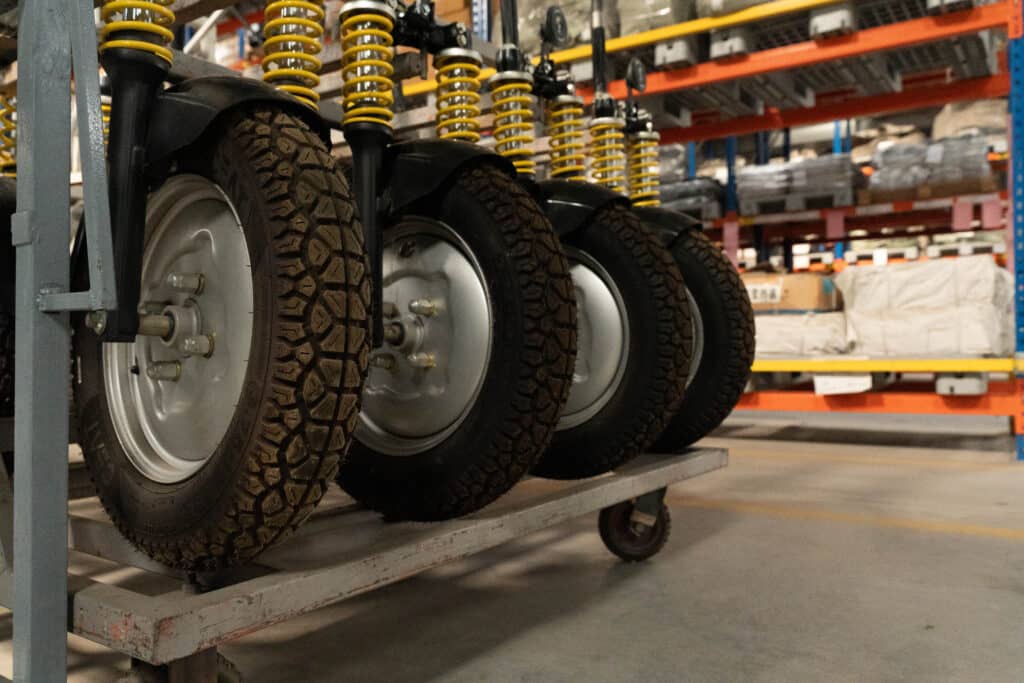
The RIDE programme is supporting Kinetic Green to address this challenge by enabling the entry and adaptation of proven EV platforms for African operating environments. The partnership is focused not only on vehicles, but on building the conditions required for adoption, including local assembly, technician capability, distribution channels, customer awareness and after-sales support. Vehicles are on the road in Ethiopia and additional market expansion is in scope. These deployments are generating practical evidence on product performance, customer demand, and the ecosystem requirements needed to support scale across African markets.
At GloCon 2026, RIDE collaborators gathered to share lessons from this journey and discussed how partnerships between development actors, governments and private sector manufacturers can help strengthen Africa’s electric mobility ecosystem and expand access to cleaner, more productive transport solutions.
The RIDE partnership has also supported the Africa Corporate Innovation Program (ACIP) – a corporate co-creation and innovation platform run by Double Feather Partners (Africa focused venture capital and advisory firm) in partnership with Shell Foundation and FCDO. It brings together startups addressing societal challenges in Africa and global corporate to evaluate the commercial viability and societal impact of business models that can help solve local challenges through real-world trials, while aiming to create and scale sustainable, climate-smart and inclusive businesses.
Latest news and updates
Fresh Effort to Bring Clean Cooking to Food Vendors in Kenya and Uganda
29th October 2026